Decree
Decree Translation
Date: 18/11/1403
Leak and Confirmation of Taliban Detention Records Revealing Imprisonment of Over 1,300 Women
An anonymous platform known as Taliban Leaks published thousands of internal Taliban government documents originating from at least 21 Taliban ministries and institutions, including the Ministries of Foreign Affairs, Finance, Justice, Information and Culture, Telecommunications, Mines, the Ministry for the Promotion of Virtue and Prevention of Vice, the Prison Affairs Administration, and the Supreme Court. According to reporting, the Taliban confirmed the authenticity of the leaked documents.
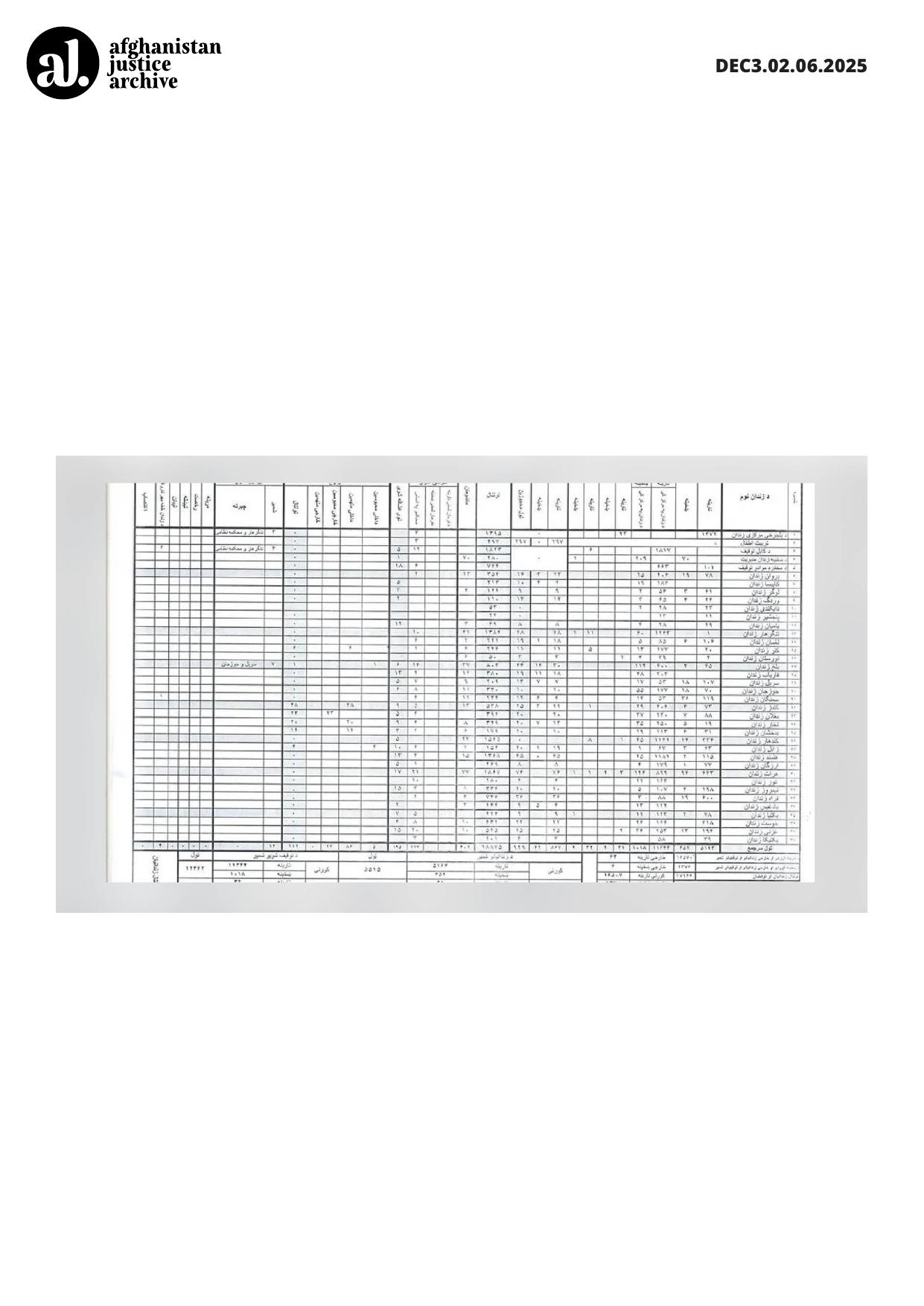
Among the released materials were internal records detailing the number of detainees held across Taliban detention facilities. These records indicate that more than 18,800 individuals are imprisoned nationwide, including 1,376 women. The data further shows that six women detainees and 63 male detainees are foreign nationals. The documents indicate that the highest number of female detainees are held at the Kabul Detention Center (209 cases), followed by detention facilities in Herat (126 women) and Balkh (112 women).
The leaked data provides rare, internally generated insight into the scale of detention under Taliban rule, particularly the systematic imprisonment of women across multiple provinces. The data is included in the document attached.
The leaked and Taliban-confirmed detention records reveal the scale and institutionalization of women’s imprisonment across Afghanistan under Taliban rule. The documentation demonstrates that the detention of women is not incidental or localized, but embedded within a nationwide carceral system spanning civilian, judicial, and moral-policing institutions. The presence of over 1,300 women in detention—many held for morality-related or security-based accusations—points to the use of imprisonment as a mechanism of gender control and social discipline. The fact that these figures emerge from internal government records, later acknowledged as authentic, strengthens their evidentiary value and underscores the systematic nature of arbitrary detention, the absence of transparency, and the erosion of basic safeguards for liberty, dignity, and due process.
Sources
Decree Stats
Area of Decree
Issuer
Type of Decree
Targeted Gender
Delivery Method
Date Published