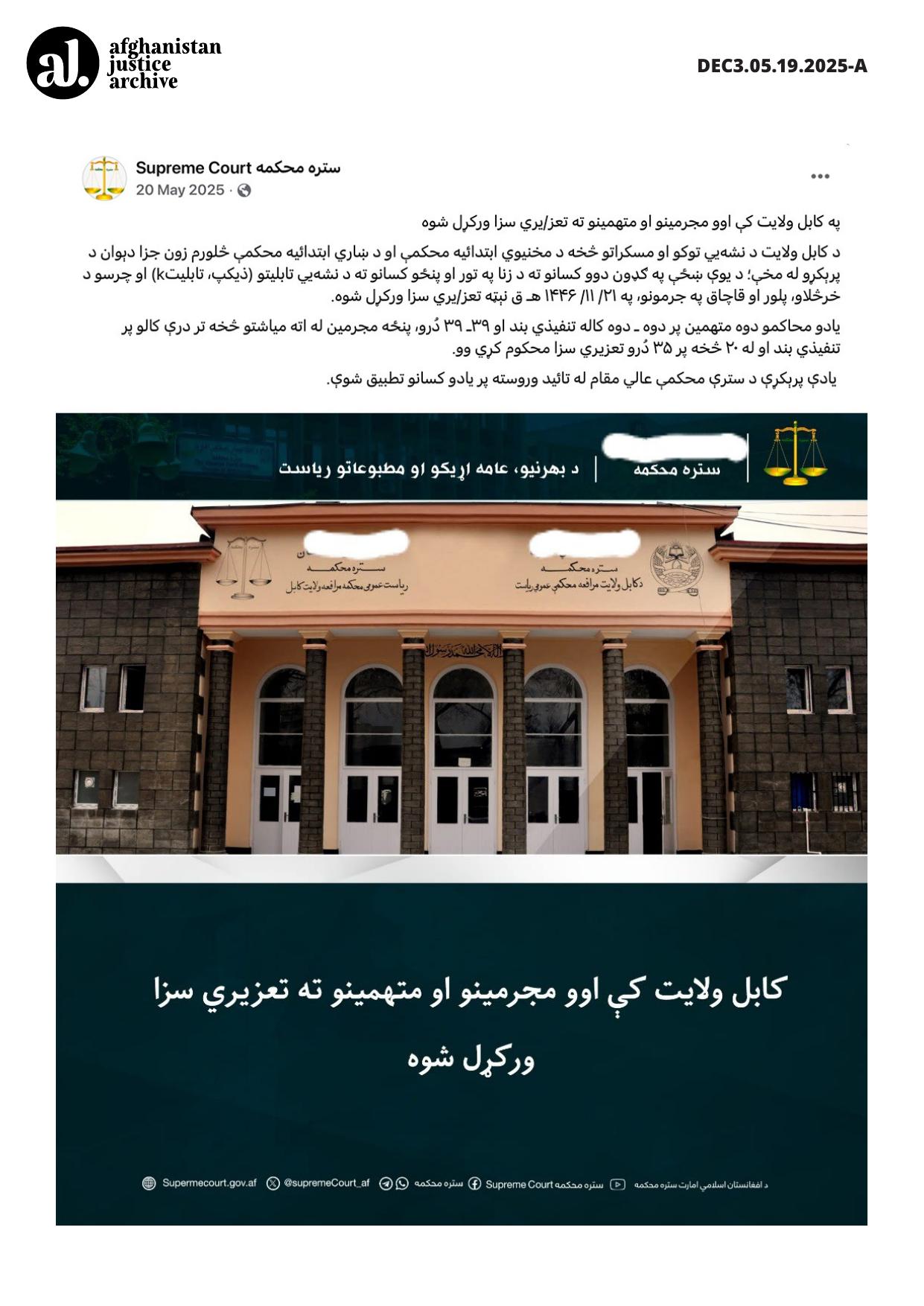
Decree
Decree Translation
Date: 21/11/1446
Discretionary Punishments Carried Out Against Seven Convicted Persons and Defendants in Kabul Province
According to the decisions of the Primary Court for the Prevention of Narcotics and Intoxicants of Kabul Province, and the Criminal Division of the Fourth Urban Primary Court, discretionary punishments (taʿzir) were carried out on 21/11/1446 AH against seven individuals. Two of them, including one woman, were sentenced on charges of adultery, while the remaining five were sentenced for crimes related to the sale, distribution, and trafficking of narcotic tablets (Zecap, Tablet K) and hashish.
The aforementioned courts had sentenced the two defendants to two years of imprisonment each, along with 39 lashes each. The five convicted individuals were sentenced to imprisonment ranging from eight months to three years, as well as discretionary lashes ranging from 20 to 35 lashes.
These rulings were implemented after being approved by the High Authority of the Supreme Court.
This entry documents the implementation of discretionary criminal punishments (taʿzir) in Kabul Province following rulings by Taliban primary courts. The sentences combined imprisonment with corporal punishment, including flogging, for offenses described as adultery and narcotics-related crimes. The use of lashes as part of criminal sentencing reflects the Taliban justice system’s continued reliance on corporal punishment to enforce both moral and criminal prohibitions. The approval of the sentences by the Supreme Court authority indicates centralized oversight of such punishments and their formal integration within the Taliban’s judicial framework
Sources
Original Source Link:
Original Decree File:
Decree Stats
Area of Decree
Issuer
Type of Decree
Targeted Gender
Delivery Method
Date Published